
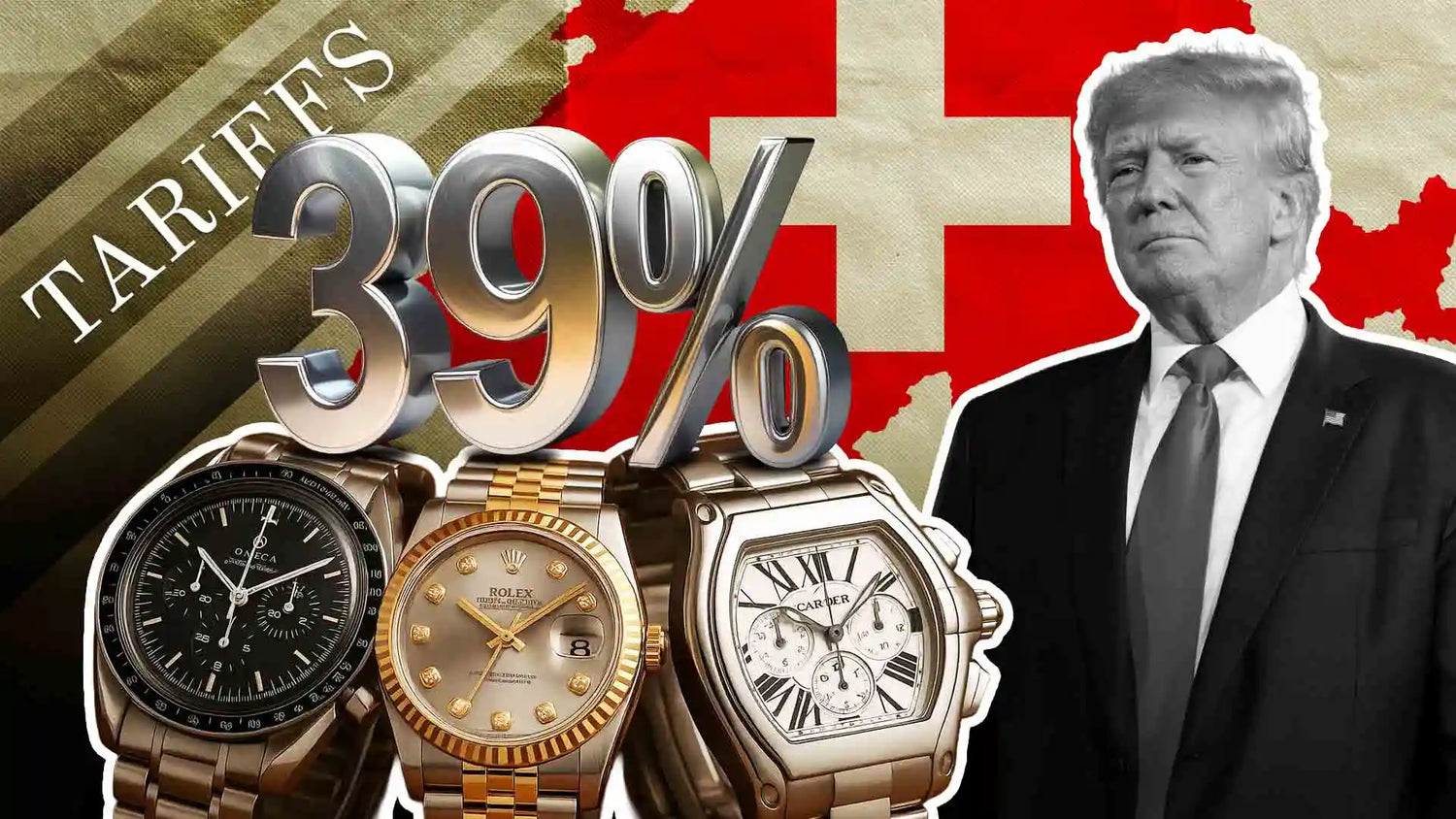
Starting August 7, 2025, the U.S. has officially imposed a 39% tariff on Swiss imports, with Swiss timepieces—arguably the crown jewel of Switzerland’s exports—being among the hardest hit. This decision, aimed at addressing a $39 billion trade deficit with Switzerland, is already sending shockwaves across the luxury watch industry and among American buyers.
What does the Tariff mean for Consumers?
The math is simple but painful for collectors and enthusiasts: prices are going up—sharply. Because Swiss watchmakers and retailers cannot absorb the full brunt of a 39% import duty, costs will almost entirely fall on the buyer.- A Swiss watch that once sold for $10,000 will now carry a price tag of roughly $13,900.
- Analysts suggest that while short-term price adjustments may hover around 12–14%, the full tariff will inevitably filter through over time.
- Both new and pre-owned watches are affected, pushing more buyers toward the secondary market as they seek to avoid inflated retail tags.
How the Industry Is Responding?
Swiss brands anticipated the move and rushed extra inventory to the U.S. before the tariff deadline, creating a temporary cushion before sticker shock sets in. But as these stocks dry up, higher prices will become unavoidable. The U.S. is still Switzerland’s biggest overseas market for watches, making up 16–18% of exports valued at $4.4 billion in 2024. With such strong dependence, the ripple effects are significant:- Some independent watchmakers have already paused online orders for the U.S. market.
- Major brands are rethinking their distribution and pricing strategies, considering whether to redirect more focus toward Europe, the Middle East, or Asia.
- Retailers in the U.S. may see more demand for trade-ins and pre-owned stock, as buyers look for alternatives.
Shifting Market Dynamics
Compared to the roughly 15% tariff on EU or Japanese watches, the Swiss penalty stands out. This could nudge American consumers toward non-Swiss luxury brands, creating new opportunities for competitors while hurting Switzerland’s global dominance in horology. The economic consequences reach beyond watch boutiques:- Switzerland faces the risk of layoffs, reduced production, and slowed growth in a sector that symbolizes its craftsmanship.
- U.S. buyers may increasingly look abroad, traveling to Switzerland or other regions to purchase watches at untaxed prices, potentially fueling a grey market boom.


Leave a comment
This site is protected by hCaptcha and the hCaptcha Privacy Policy and Terms of Service apply.